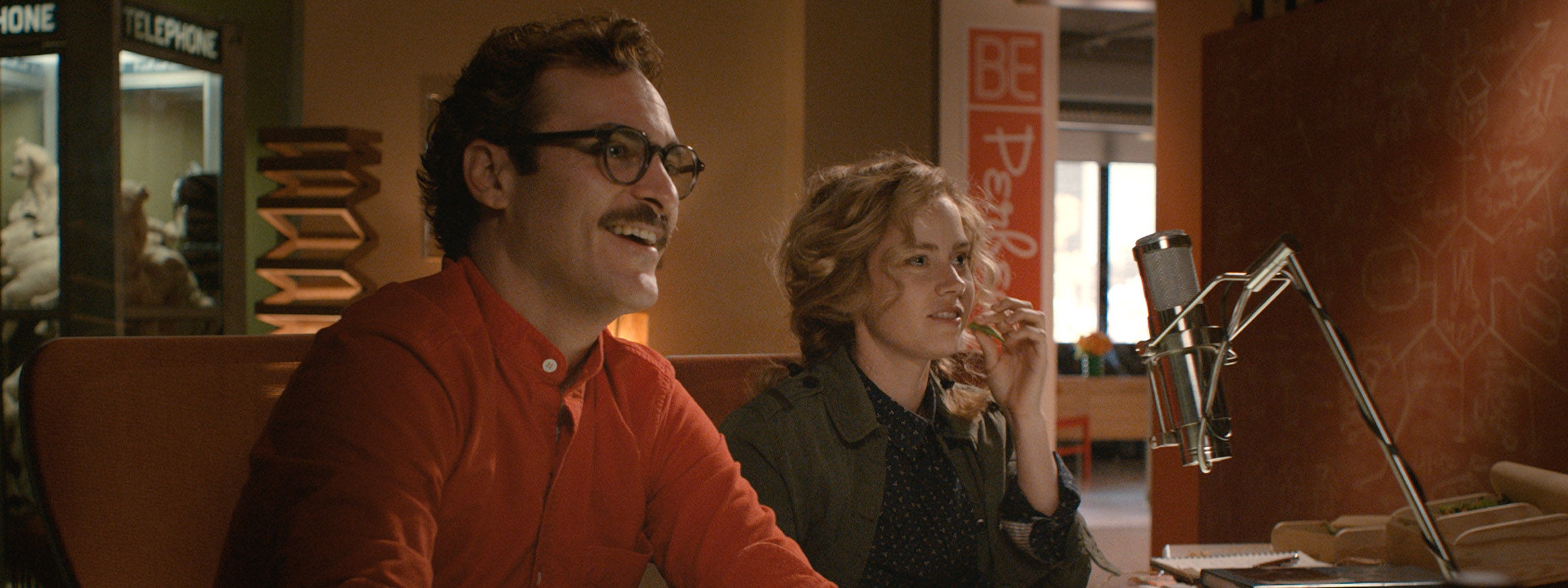
1. HER At first glance, the basic premise of the film is pretty ridiculous: a man in the near-future falls in love with his operating system. In the hands of almost any other director in the world, Her would come off as campy, melodramatic, absurd, corny, or spurious. However, Spike Jonze (Being John Malkovich, Where the Wild Things Are) crafts a remarkable tale that challenges the everyday concepts of love and relationships. The film poses plenty of difficult questions (even the theory of singularity) and explores them in a subtle, unassuming, and authentic manner. Scarlett Johansson, who voices the operating system named Sam, achieves (with some exquisite writing by Jonze) what I originally thought was impossible: to bring to life an entity that everyone knows (even Sam herself) is nothing but a series of zeroes and ones and yet have the audience care deeply about her emotions and her journey to understand what and who she truly is. And finally, it seems as if both Joaquin Phoenix and Amy Adams should get used to being at the top of my annual top-ten lists (see last year’s The Master).
 2. SHORT TERM 12 I have to admit, I was a bit skeptical when I first heard the premise of the film. Short Term 12 tells the story of a foster group home and the interactions between the at-risk youth and the counselors who care for them. Along the way, everyone learns a little bit more about themselves and the world around them. Sounds cheesy, right? What could have been a manipulative melodrama is actually an authentic, deeply moving human drama with some of the best performances of the year. This film is taken to new heights by the up-and-coming Brie Larsen, who plays Grace, a staff member and former abuse victim who often crosses the line to fight for her kids. While acting accolades are often bestowed upon the bombastic and showy, Larsen proves that a tour-de-force performance can also be intimate and naturalistic. And much credit to writer/director Destin Crettin (in his feature-film debut) as he imbues every scene, every line, and every look with the kind of meaningful emotion that makes movies so magical.
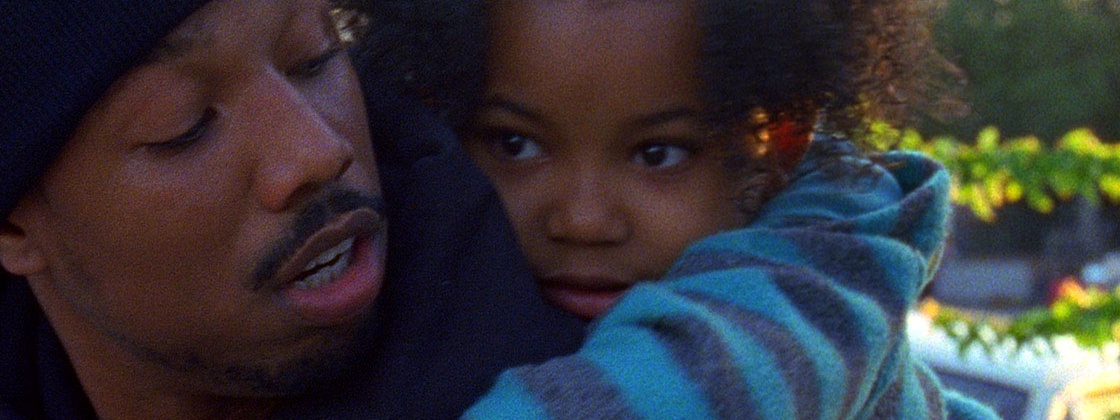 3. FRUITVALE STATION I might be a little biased with this film, just like I was with Moneyball a couple years ago. But putting aside all geographical allegiances, this debut feature from director Ryan Coogler is a beautiful, heart-wrenching trip through a seemingly routine day. One complaint I’ve often heard is that the film is not accurate at all in its depiction of Oscar Grant. But what I see and what elevates this film above others in this realm is that it’s about more than just its main character. The film is about all of the senseless and avoidable violence and murders that our world experiences everyday. But rather than having Oscar Grant turn into yet another data point, the film humanizes the victim and shows a glimpse of a life that could have been. Grant is not idolized or deified; in fact, many of his sins and shortcomings are laid bare. But Grant (Michael B. Jordan) spends the fateful day taking steps to make amends and to resolve to be a better boyfriend, father, and son. Though Jordan is receiving much of the praise, the standout performance in my mind belongs to Octavia Spencer, in her heartbreaking turn as Grant’s mother.
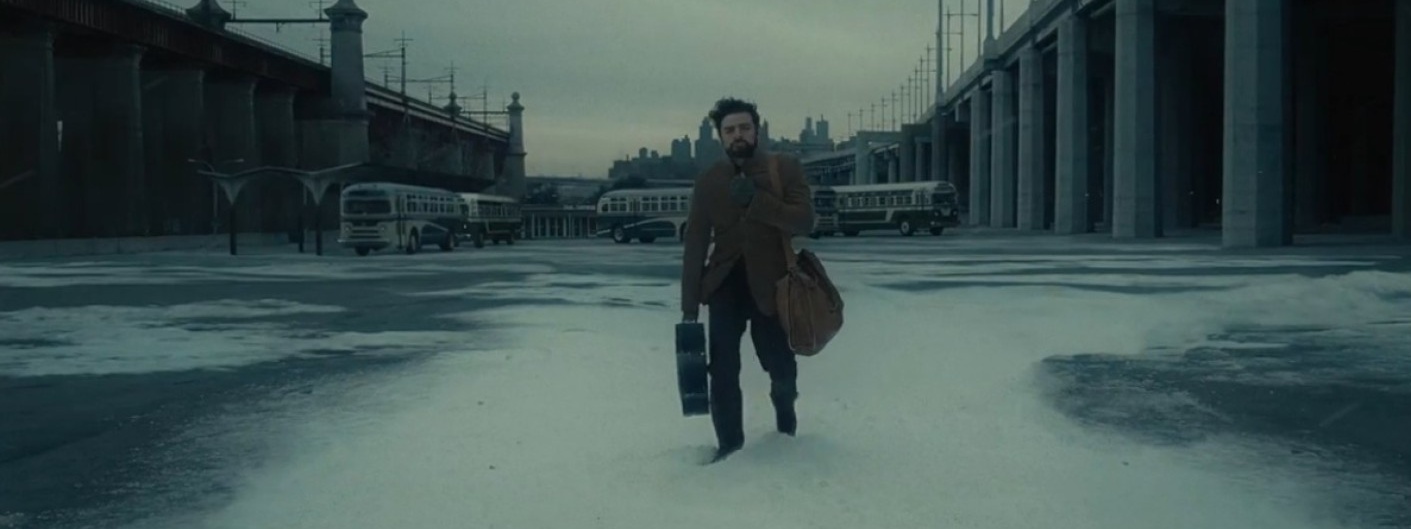 4. INSIDE LLEWYN DAVIS The Coen Brothers have made a career of telling stories of characters who are general unlikeable and lacking much of a character arc. For most filmmakers, this would be a recipe for disaster. For the Coen Brothers, this is a recipe for modern classics, such as Fargo, No Country for Old Men, and now Inside Llewyn Davis. Set in the 1960’s folk music scene of Greenwich Village, the film centers on the titular musician who struggles to get his career back on track after the suicide of his partner. Though he faces many obstacles along the way, including a pregnant Carey Mulligan, a struggle to find a place to sleep, and a scene-stealing cat who keeps running away, we soon learn that the real obstacle for Llewyn is Llewyn himself. His music is fantastic, but it’s his unwavering commitment to the authentic and “true” folk music and refusal to ever “sell-out” that is his true stumbling block. This devotion, idealism, and “mania”, as the Coens put it, are what makes us love him and what makes us frustrated with him, especially as his life starts to crumble. Oscar Isaac’s performance creates this fully-fleshed out character that we can’t help but feel invested in, but as the Coens always do, the script never coddles their characters and we, the audience, feel the frustrating pain as Llewyn continues to seek after that ever elusive dream.
 5. RUSH Would it be lame if I said that Ron Howard’s Rush was an absolute rush? OK, fine, but it’s true. What stands out initially in this film about two rival Formula-1 drivers from the 1970’s is the truly heart-pumping action sequences on the race track. I’m not sure how they did it, but every racing moment felt authentic, pretty much putting you directly in the driver’s seat. For a movie that should definitely be enjoyed on the big screen, I found it to be incredibly effective on the somewhat smaller screen of my laptop. One of themes of the film is risk, and why these seemingly normal people would choose to put their lives in such danger for mere sport. And by putting the viewers in the middle of the action, you can almost feel the daredevil insanity of these characters. But what pushes Rush into my top-ten list is the relationship between our two leads: Chris Hemsworth, as the impetuous playboy, and Daniel Bruhl, as the shrewd, soft-spoken intellectual. They are easily the best drivers in the world but opposites in everything else. And what’s so fascinating is watching these two counterparts gradually realize that one can’t live without the other. Ron Howard has made a name for himself directing smart, polished mainstream films, and Rush just may be his best yet.
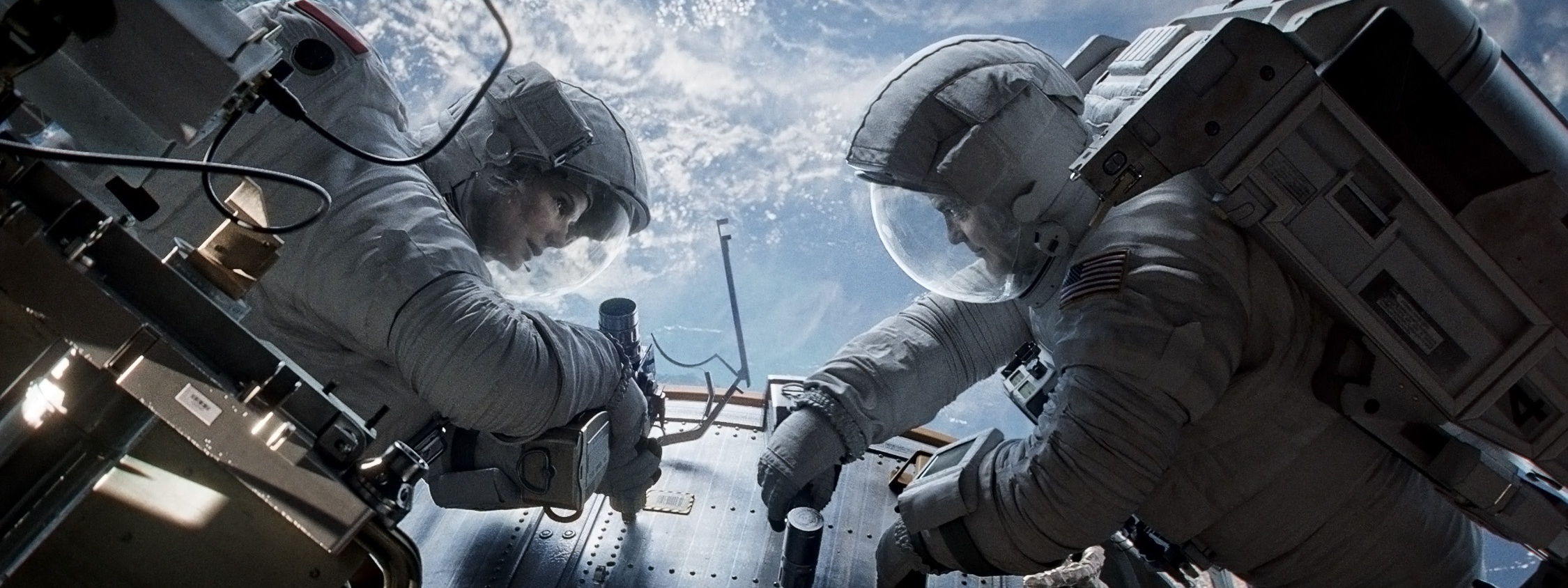 6. GRAVITY Like almost everyone else who watched Alfonso Cuaron’s poetic ode to outer space, I walked out of the theater completely in awe of what I had just experienced. With its hypnotic long takes and majestic wide shots, among others, Cuaron perfectly conveys the loneliness, claustrophobia, helplessness, and horrors of space. The film deserves every technical and cinematography accolade known to man. However, the reason Gravity is so low on my list is the same reason I had doubts about the lasting legacy of Avatar. Like Gravity, James Cameron’s 3D epic wowed audiences like never before. But with its paper-thin story and forgettable characters, Avatar is mostly remembered as merely a great technical achievement and not as a timeless film. The main complaint against Gravity is its fairly pedestrian and occasionally idiotic screenplay (why in the world do they have a medical physician repairing a satellite?). Only time will tell if Gravity will be fondly remembered as a classic or just a visual spectacle without the substance.
 7. DALLAS BUYERS CLUB According to a recent Variety interview with the producer, this film’s production budget was so low that they had to forgo even basic lighting equipment and instead rely completely on practicals. What’s so extraordinary is the fact that, when you have performances this good, the audience will unknowingly ignore many basic elements that it often take for granted. Obviously, the film’s success starts with Matthew McConaughey, who has quickly transformed himself into a member of elite screen performers (including his turn in Killer Joe, a top-ten pick from last year). He absolutely disappears into the role of Ron Woodruff, a 1980’s Texan white-trash, drug-addled bigot who contracts HIV and finds himself in a battle against the FDA, US Customs, and the pharmaceutical industry in his renegade pursuit of affordable and effective treatment. He is assisted by a pre-op trans-woman (the amazing Jared Leto, in his first role in four years) and a sympathetic and rebellious doctor (the underappreciated Jennifer Garner). Even when the story becomes a little too tidy, with Woodruff’s too-quick and too-convenient transition from homophobe to champion of the AIDS and LGBT community, the film overcomes all obstacles with an overall intelligent script and the sheer force of its three lead stars.

8. THE WOLF OF WALL STREET Somewhat unsurprisingly, the controversy over the latest Scorsese-DiCaprio partnership’s perceived celebration of Wall Street crime and excess in the wake of the recent financial meltdown has largely overshadowed the artistic accomplishments of the film. And perhaps, in a self-reflexive sort of way, the filmmakers actually intended for the expected uproar to play a key part in elevating the film from a mere solid achievement into an interactive social commentary on our dysfunctional relationship with the financial sector. Intent, as always, is nearly impossible to prove, but a key piece of evidence is the final shot of the film, where an on-screen audience sits entranced and looking directly into the lens as it listens to Jordan Belfort teach his secrets of salesmanship. The shot, which was not originally part of the plan but was later suggested by DiCaprio, argues that we may hate the predatory hedonism of Wall Street but, deep down, we know that if we were in a similar situation where we could reap millions at the expense of the invisible other (and maybe do pills and coke and prostitutes in the process) and get away with it, we probably would. And we hate ourselves for knowing that. So instead, we project that hate onto the film. Intent aside, that’s the power of movies.
 9. A TOUCH OF SIN This Chinese film, which made its debut in competition at Cannes, tells four true stories of four regular people in four different provinces who are driven to violence when dealing with the corruption, abuse, alienation, and hopelessness of contemporary China. Its stark commentary is often seen as a protest against China’s rapidly changing society and the autocratic rule of the Communist regime (surprisingly though, Jia Zhiangke’s latest film was recently approved by censors for release in China). The beautifully shot film effectively demonstrates the growing tensions of society and how they drive these lead characters to resort to extreme “solutions”. The lack of musical score and the meditative pace make the brief acts of violence incredibly shocking and brutal, especially when juxtaposed with the poetic tone of the film. The film possesses a dauntingly large scope and tackles very complex topics, but its success is derived not so much by its portrayal of general Chinese society but by getting to the deepest, darkest depths of these four desperate individuals.

10. FRANCES HA This film from writer/director Noah Baumbach and star/co-writer Greta Gerwig tells the story of a free-spirited dancer from Sacramento trying to navigate the awkwardness, confusion, and insecurities of her late-20’s in New York City. As an awkward, confused, and insecure Northern California kid myself trying to find his way in NYC, I can relate on a lot of levels. But beyond that, what makes this film so much fun is its frenetic energy and the quick, dry wit from all the characters. However, all that energy and humor are harnessed exquisitely for the purpose of exposing the deeper longings and anxieties of the titular heroine. And Gerwig is absolutely magnetic in every scene as she deals with the challenges of her social and professional lives.
 Possibly Interesting
Reblogged this on Collin Medford and commented:
Check out my friend and colleagues list of top films of 2013