 1. The Master Director Paul Thomas Anderson has, through his career, become an increasingly complex and difficult storyteller, but his genius cannot be understated. From Boogie Nights and Punch Drunk Love to There Will Be Blood and now The Master, Anderson has become a director who unapologetically marches to the beat of his own drum (who else today would film in glorious 70-mm?). There’s no getting around it: The Master is weird, perplexing, beautiful, and even physically painful (not unlike the concoctions Joaquin Phoenix imbibes throughout). But it begs to be watched a second time. And a third. Its images stick with you weeks after you’ve seen it, forcing you to spend your waking hours trying to piece together what it all means. Deep down, you feel like you truly understand the characters and what it’s trying to say, but the film is far more complex than you originally thought, and, in this case, that’s a good thing. Anderson accomplishes this task with a lot of help, including historic performances from Phillip Seymour Hoffman, Amy Adams, and, of course, the back-from-insanity Joaquin Phoenix.
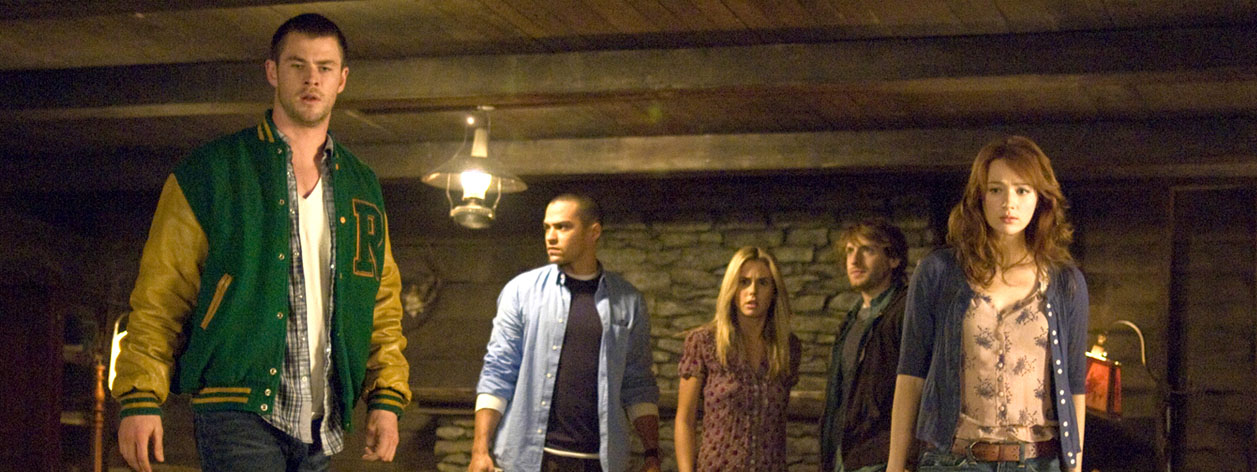 2. The Cabin in the Woods The fundamental purpose of almost all films should be to entertain the viewer, and The Cabin in the Woods was arguably the most fun I have ever had in a movie theater. Just thinking about the film makes me smile. Dubbed a “love-hate letter to the horror genre” by writer Joss Whedon, this film is an insanely creative satire of and tribute to the horror/slasher films that we have seen overpopulate our theaters for the last three decades. Filmed and then shelved for more than two years due to MGM’s financial troubles, the film was finally released to adoring crowds at the South by Southwest festival, and the world is better for it. This is a must-see for anyone who considers himself even the most casual of horror fans and is also one of those films that is best seen knowing nothing going in. I have already said too much.
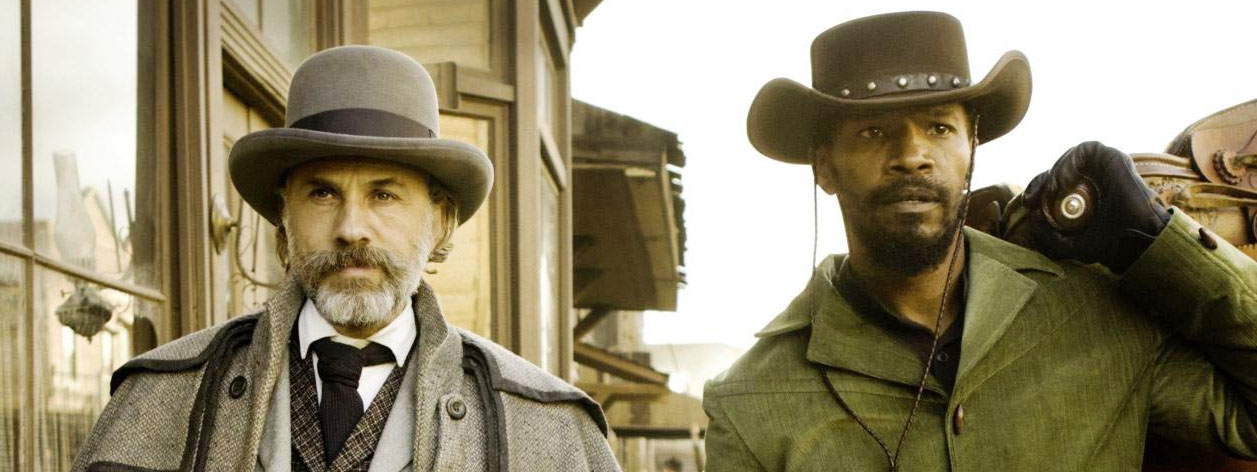 3. Django Unchained I agree with the criticism that director Quentin Tarantino dwells on the theme of revenge a little too much. But when the theme is tackled with such brilliance, then so be it. In Django Unchained, Tarantino continues his recent trend of revisionist history with his irreverent take on slavery and the South, led by Jamie Foxx and Christoph Waltz as a tour-de-force duo hunting down slavers to save Django’s wife. This film is wildly fun, which might be the first time that can be said about a movie about slavery, and sometimes too much so (the pillowcase mask scene is hilarious but oddly out of place). And time flies when you’re having this much fun, as the three-hour runtime feels about half that. Though playful and irreverent, it pulls no punches when depicting the savagery of the era, such as the brutal mandingo scene (a quick Google search, however, showed that mandingo fighting never actually existed in America) and when a runaway slave is torn apart by dogs. Perhaps the highlight of the film is Leonardo DiCaprio. Though he spent much of the last decade playing essentially the same brooding, depressed character, he is clearly having the time of his life as the delightfully malevolent Calvin Candie.
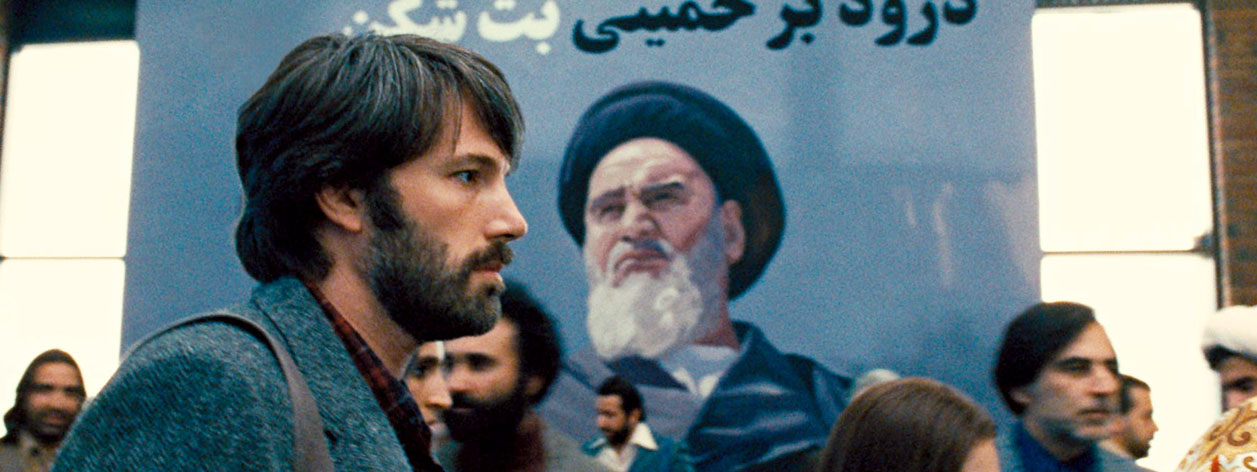 4. Argo Ben Affleck, the celebrated star of such dramatic hits as Pearl Harbor, Daredevil, and the incomparable Gigli, has somehow transformed himself into one of the best directors working in Hollywood today. Before directing the surprise Oscar-nominated Gone Baby Gone in 2007, his only previous directing credit was a 16-minute short entitled “I Killed My Lesbian Wife, Hung Her on a Meat Hook, and Now I Have a Three-Picture Deal at Disney”, which he made as an undergraduate student at Occidental College in 1993. What happened during those 14 years, when he was nothing but another pretty face? We may never know. All we do know is Affleck has become one hell of a filmmaker. Argo, based on a story during the Iran Hostage Crisis of 1979, demonstrates an astonishing grasp of cinematic tension. From the opening embassy invasion scene to the surprisingly simple airport scene (has waiting in line ever been more suspenseful?), the structure of each scene and the pacing of the film overall left me in absolute awe. I don’t know if Affleck is taking filmmaking steroids or was abducted by aliens and replaced by a fake super-talented Affleck, but I hope he keeps doing what he’s doing.
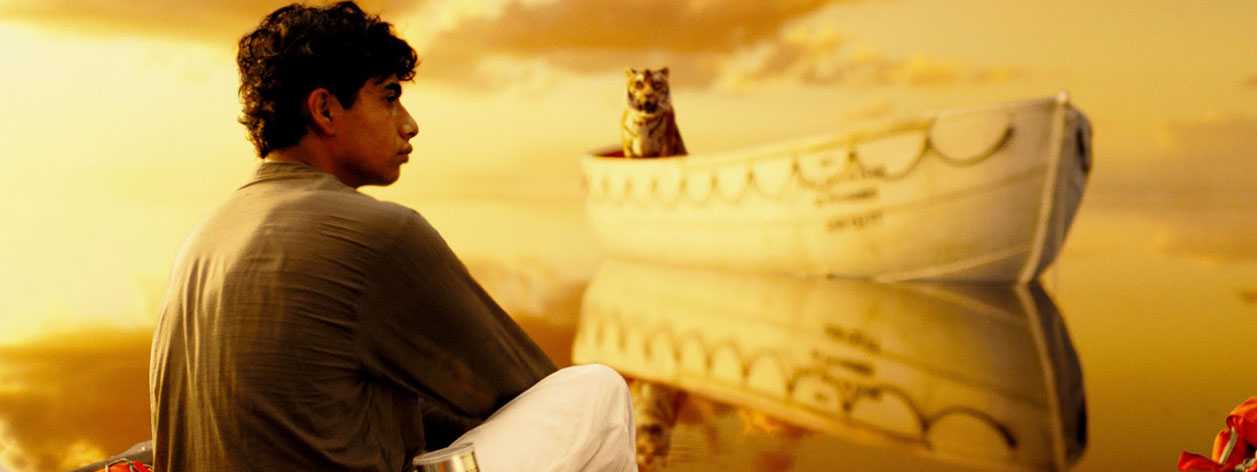 5. Life of Pi Some said the story of a boy and a tiger in the middle of the ocean was unfilmable, or at least really, really difficult to make into a compelling film. So of course, Ang Lee accepted the challenge and created what is undoubtedly one of the greatest visual masterpieces of all-time. Lee admitted that he had zero prior experience with 3D and the entire process of shooting Life of Pi was just trial-and-error. The fact that he created a 3D spectacle that quite possibly surpasses Avatar speaks volumes to Lee’s natural talent as a filmmaker. Additionally, the artists and programmers who made Richard Parker the Tiger come to life deserves all the technical accolades in the world. When you see the animals, your brain tells you they are animated, but your eyes think otherwise. The film isn’t without its problems; the narrative structure with the present-day interview greatly hinders the rhythm of the story and the final monologue is visually uninspired, but the visuals, from a submerged Pi watching his ship sink to the unforgettable storm of flying fish, elevate the film from merely a story of faith to an unparalleled work of visual artistry.
 6. Looper Time travel stories, in their very nature, contain paradoxes and unanswered questions, and the more ambitious the time travel story is, the more problems there seems to be. And Looper is no exception. The list of issues is long: why can’t you just send prisoners straight into the incinerator? Why do you need a past Looper to kill his future self? And for much of the film, I was worried that director Rian Johnson would never overcome so many fundamental problems. Such innovative concepts as Paul Dano’s future self suffering the torture and amputations of his past self in addition to all the exhilarating shootouts and action sequences made it easier to ignores those questions, but those questions still lingered. However, the climax and finale were so compelling and emotionally satisfying that I was more than happy to finally forgive the film’s faults. All paradoxes aside, Johnson delivers a mind-bending thrill ride that deserves to be included with such time-travel classics as The Terminator, Minority Report, and Back to the Future.
 7. Amour There’s been countless love stories told throughout history, but when it’s Austrian director Michael Haneke’s turn to tell a love story, you know things are going to be different. Amour is the story of an octogenarian couple and what happens to them when the wife suffers a stroke and falls into dementia. It’s a quiet, subdued film, almost entirely contained in one apartment and where much of the story’s potency is derived from what’s left unsaid. Emmanuelle Riva was rightfully rewarded with an Oscar nomination for her powerful performance, despite (or perhaps, as a result of?) being mostly mute and bedridden. Love can be a painful and harrowing experience, especially when faced with obstacles as debilitating as dementia and death. Sparse and simple but endlessly moving, this impeccably filmed story is a triumphant exploration of life, death, and amour.
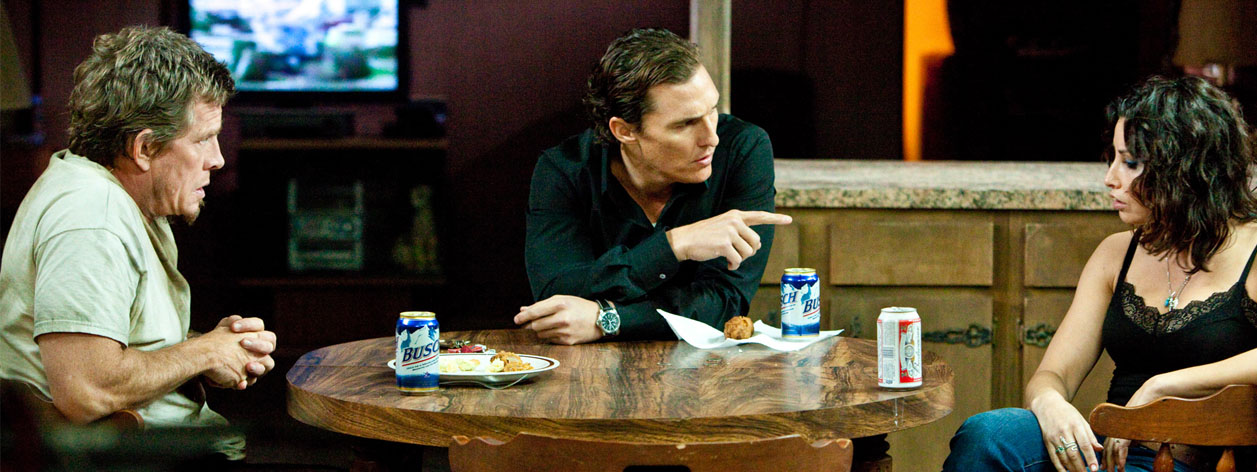 8. Killer Joe With impressive against-type performances in Bernie and Magic Mike, Matthew McConaughey is perhaps the biggest surprise of the year, with Killer Joe being the prime example of his maturation as an actor. In this mostly overlooked stage adaptation from director William Friedkin (The Exorcist), trailer trash drug dealer, Chris (Emile Hirsch), hires a contract killer named Joe (McConaughey) to murder his mother for the insurance money to pay off a loan shark. When the insurance payout doesn’t work out as anticipated, Joe takes Chris’ odd, childlike sister, Dottie, as a “retainer” and proceeds to terrorize the family. Despite the lack of anything beyond R-rated content, this film was rated NC-17, demonstrating how dark and twisted McConaughey is, as he domineers and sexually intimidates Chris and his family. Killer Joe is a darkly comic tale of greed, stupidity, and dysfunction, and Friedkin laudably sits back and lets McConaughey and the supporting cast, including the fantastic Thomas Haden Church and Gina Gershon, bring the absurdity to life.
 9. This Is 40 Being a parent, child, or spouse can be difficult and frustrating, even when you’re an upper-middle-class white family. The topic may seem trite to some, but Judd Apatow’s fourth directorial effort explores these familiar themes with the honesty, poignancy, and depth that we’ve come to expect from the creator of The 40-Year-Old Virgin and Knocked Up. With Apatow’s real-life wife and children on-screen and Paul Rudd as his fill-in/doppelganger, this film is probably deeply personal for Apatow. And after the painfully unfunny Funny People, This Is 40 is actually intelligent and hilarious. One major criticism of this film is that it’s nothing but a bunch of loosely connected scenes, but isn’t that what life is: messy and fickle? Admittedly, there is nothing truly groundbreaking about this film, but it is an entertaining and curiously vivid exploration of an American family, and even mediocre Apatow is still some of the best comedy in Hollywood today.
 10. The Hunger Games OK, I’m as surprised as you probably are. For the final spot on my list, I was considering Flight, Anna Karenina, and The Hobbit, but somehow, this popcorn flick snuck its way in. Based on the wildly popular teen novels, The Hunger Games took the advice from Harry Potter by proving that tent-pole blockbuster movies don’t have to be crap. Writer-director Gary Ross (Seabiscuit) does an admirable job of bringing to life the unique dystopic vision of author Suzanne Collins, and Jennifer Lawrence proves here that she has what it takes to be an A-list star. This movie has everything you want from a big-budget movie: solid action (though the shaky-cam was definitely controversial), a not-all-that-sappy love triangle, and a beautifully imagined visual universe. But what elevates this film above other notable blockbusters of the year (Skyfall, The Dark Knight Rises, The Amazing Spider-Man) is that the story’s emotional core (between Katniss and her sister, Gale, and Peeta) is delivered with stark sincerity and surprising depth.
 Possibly Interesting